

If you’ve ever tried to lose weight, you know the frustration. You follow the rules, cut your calories, hit the gym—and the scale barely moves. Or worse, you drop a few kilos only to watch them creep back within months.
Here’s the thing: most people fail not because they lack willpower, but because they’re making common weight loss mistakes that sabotage their efforts from the start. Research suggests that understanding these pitfalls can make the difference between yo yo dieting and actual, lasting fat loss.
In this guide, we’ll walk through five of the most frequent mistakes people make on their weight loss journey—and more importantly, how to avoid them. Whether you’re just starting out or you’ve been stuck on a plateau for months, these practical corrections can help you build a weight loss plan that actually works in 2026 and beyond.
1. Slashing Calories Too Hard and Too Fast
The 800–1,000 calorie crash diet was everywhere in the 1990s and 2000s. Magazines promised rapid results, and people believed that eating almost nothing was the fastest path to a smaller body. We now know this approach backfires spectacularly—slowing your metabolism, triggering intense cravings, and setting you up for rebound weight gain.
When you drop your calorie intake too drastically, your body responds by conserving energy. Your basal metabolic rate slows down, you move less without realizing it (lower NEAT), and fatigue sets in. The result? You burn fewer calories at rest while feeling constantly hungry and irritable. This makes it nearly impossible to sustain, and when you inevitably return to normal eating, the weight comes back—often with extra.
Consider this scenario: Sarah was eating around 2,200 calories daily and decided to drop to 1,000 in January. She lost 4 kg in the first two weeks, felt victorious, but by mid-February she was exhausted, cold all the time, and dreaming about bread. By April, she’d regained 6 kg. Sound familiar?
Signs you’re under-eating:
- Constant tiredness that coffee can’t fix
- Feeling cold even in warm rooms
- Irritability and mood swings
- Poor sleep quality
- Stalled scale weight despite “eating almost nothing”
- Losing hair or brittle nails
What to do instead: Aim for a moderate calorie deficit—around 400–500 calories below your maintenance level. For most adults, this translates to a safe loss rate of about 0.5–1 kg (1–2 lb) per week. This pace might feel slow, but it protects your muscle mass and keeps your metabolism humming.
Practical strategies:
- Use a food diary app for 1–2 weeks to estimate your current calorie intake
- Reduce portion sizes slightly rather than cutting entire food groups or skipping meals
- Focus on nutrient-dense foods that keep you satisfied
- Adjust based on how you feel—energy should stay relatively stable
Tools like Simple can help you estimate portions, track patterns, and avoid drifting into “all or nothing” starvation territory. The goal is building awareness, not obsessing over every gram.
If you feel worse every week and your energy is crashing, your plan is probably too aggressive. Consider consulting a registered dietitian nutritionist or healthcare provider to recalibrate.

2. Ignoring Protein and Fiber at Meals
In 2025, many dieters focus on cutting calories or restricting carbs while forgetting the basics of satiating meals: adequate protein and fiber. These two nutrients are your secret weapons for controlling hunger and protecting your body composition during weight loss.
Why protein matters during fat loss:
- Protects muscle mass: When you’re in a calorie deficit, your body can break down muscle for energy. Eating enough protein signals your body to preserve lean tissue.
- Keeps you full: Protein is the most satiating macronutrient, reducing the urge to snack between meals.
- Burns more calories during digestion: The thermic effect of protein is higher than carbs or fat, meaning you use more energy just processing it.
Practical intake range: Aim for around 1.2–1.8 g of protein per kilogram of body weight daily if you’re active and trying to lose fat. (Check with a clinician if you have kidney issues or other health problems.)
Protein sources for everyday meals:
| Meal | Protein Options |
| Breakfast | Greek yogurt (plain, not flavored), eggs, cottage cheese |
| Lunch | Chicken thigh, canned tuna, lentil soup, tofu |
| Dinner | Salmon, lean beef, tempeh, legumes |
| Snacks | Handful of nuts, string cheese, edamame |
Why fiber is your friend:
Fiber acts as a “slow-down” nutrient. Viscous fiber forms a gel in your gut, slowing digestion and evening out blood sugar spikes. This means fewer cravings later in the day and more stable energy levels.
Simple high-fiber swaps:
- White bread → whole grain bread
- Sugary cereal → oats with berries
- White pasta → lentil or whole-wheat pasta
- Afternoon biscuits → apple and a handful of nuts
- White rice → brown rice or quinoa
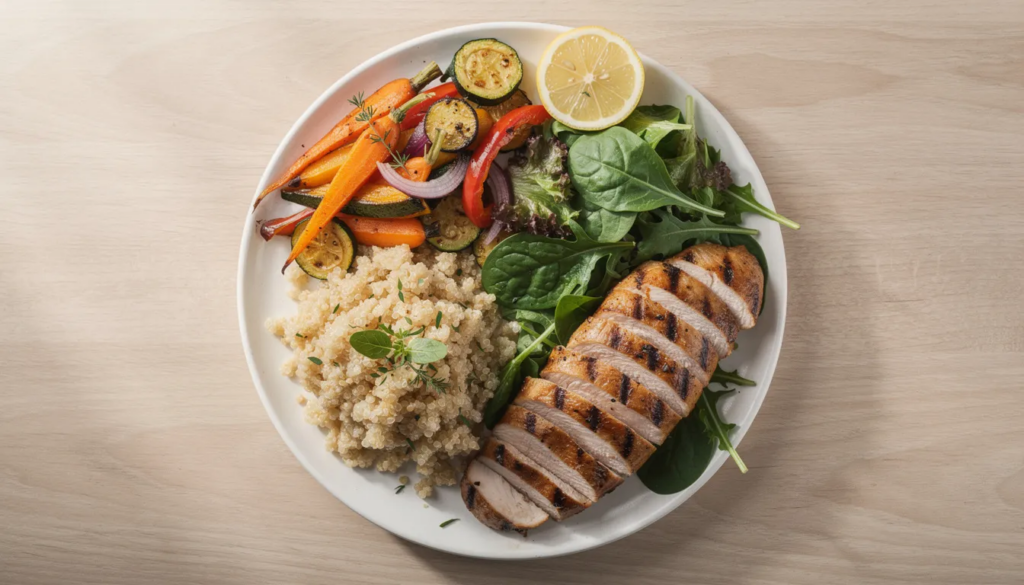
Visual rule to remember: At every main meal, include a source of protein and a source of fiber. Try to fill at least half your plate with vegetables at lunch and dinner. This simple habit supports gut health, improves satiety, and helps you hit your fiber goals without overthinking.
Apps like Simple can help you log meals quickly, spot where protein and fiber are low, and get gentle nudges to rebalance—without rigid “good vs. bad food” rules.
3. Trusting “Healthy” Labels and Hidden Liquid Calories
Marketing is powerful. Terms like “low fat,” “plant-based,” “gluten-free,” or “no added sugar” create a health halo that tricks people into overeating. Just because something sounds healthy doesn’t mean it supports your weight loss goals.
Common traps to watch for:
- Granola labeled “natural” often contains more sugar per serving than some desserts
- Protein bars marketed to gym-goers can pack the same calories as a chocolate bar
- Store-bought smoothies frequently contain the juice of several fruits plus added syrup, totaling 400+ calories
- Low fat yogurt may have 23+ grams of added sugar to compensate for taste
- “Healthy” muffins from cafés can exceed 500 calories
The liquid calorie problem
Sugary drinks are weight loss saboteurs because our brains don’t register liquid calories the same way as solid foods. You can drink 300 calories and feel no more satisfied than if you’d had water.
The numbers don’t lie:
| Beverage | Approximate Calories |
| 500ml soda or sweetened iced tea | 200–250 |
| Large flavored latte with syrup | 250–400 |
| 350ml “100% fruit juice” | 150–180 |
| Medium frappuccino with whipped cream | 350–500 |
| Glass of wine | 120–150 |
| Craft beer (pint) | 200–300 |
That daily sweetened coffee can add up to 2,000+ extra calories per week—enough to prevent any weight loss entirely.
How to read labels like a pro:
- Check the serving size first (some bottles contain 2–3 servings)
- Look at calories per serving and multiply if needed
- Find grams of added sugar (the CDC recommends under 50g daily on a 2,000-calorie diet—about 12 teaspoons)
- Compare similar products; differences can be dramatic
Smart beverage swaps:
- Soda → flavored sparkling water or herbal tea
- Sugary latte → black coffee or coffee with a splash of milk
- Fruit juice → whole fruit (you get fiber and feel fuller)
- Energy drinks → green tea or plain water with lemon
Try this: Track every drink for one week—water, juices, coffee drinks, alcohol. Many people find an easy place to cut 150–300 calories per day without feeling deprived at all.
Simple and similar logging tools let you enter drinks alongside food, revealing how many calories are coming from beverages. For many dieters, this is the quickest win available.
4. Skipping Strength Training and Relying Only on Cardio
Walk into most gyms and you’ll see the same pattern: people trying to lose weight spend an hour on the treadmill while ignoring the weight room entirely. In 2025, this “more cardio equals more fat loss” myth persists—even though research consistently shows it’s incomplete at best.
Why muscle matters for weight management:
- Muscle tissue burns more calories than fat at rest
- Higher muscle mass supports daily movement and functional strength
- Preserving muscle during weight loss means better body composition—not just a smaller number on the scale
- Muscle loss makes long-term weight maintenance significantly harder
When you rely only on a calorie restricted diet or long, low-intensity cardio, you risk losing muscle along with fat. The result is often a smaller but “softer” body with less metabolic capacity—making it easier to gain weight back later.
The cardio trap:
People tend to overestimate how many calories cardio burns. That 60-minute treadmill session might show 500 calories on the display, but fitness trackers can overestimate by 20–30%. If you then “eat back” those calories with a post-workout treat, you’ve eliminated your deficit entirely.
Research suggests that excessive cardio without resistance training can even increase appetite, leading some people to consume more food than they burned.
A better approach:
Include resistance training at least 2–3 times per week, focusing on major muscle groups:
| Movement Pattern | Examples |
| Squat/Leg Press | Goblet squats, leg press, lunges |
| Hip Hinge | Deadlifts, Romanian deadlifts, glute bridges |
| Push | Push-ups, bench press, overhead press |
| Pull | Rows, pull-ups, lat pulldowns |
| Core | Planks, dead bugs, pallof press |
No gym? No problem. Bodyweight exercises work perfectly well as starting points:
- Push-ups against a wall or on knees
- Chair squats or air squats
- Glute bridges on the floor
- Planks for core stability
- Step-ups on stairs
The ideal combination:
Pair 2–3 short strength sessions (30–45 minutes) with moderate physical activity like walking, cycling, or swimming. This approach supports muscle mass, boosts metabolism, and is far more sustainable than chasing huge daily calorie burn estimates.
Track performance, not just weight: Non-scale victories matter. Can you do more reps? Lift heavier weights? Need less rest between sets? These improvements show real progress even when the scale fluctuates.
Simple’s habit-tracking approach can help you build consistency with strength training—because showing up regularly matters more than any single perfect workout.

5. Expecting Overnight Results and Quitting Too Soon
Social media is flooded with “30-day transformations” and dramatic before-and-after photos. These create wildly unrealistic expectations about how fast healthy fat loss should happen—and they’re often misleading, enhanced, or outright fake.
Here’s the reality: normal weekly weight loss for most people is about 0.5–1 kg (1–2 lb). That means visible change happens over months, not days. If you expect to look different after two weeks, you’re setting yourself up for disappointment and abandonment.
Why the scale lies (temporarily):
Your body weight fluctuates daily based on several factors that have nothing to do with fat:
- High-sodium meals cause water retention
- Menstrual cycle phases shift fluid balance
- Increased carb intake after low-carb days refills glycogen and water
- Sore muscles after new workouts hold extra water for repair
- Constipation or digestion timing affects morning weigh-ins
A single day’s fluctuation of 1–2 kg is completely normal and doesn’t reflect true fat gain or loss.
Better ways to track progress:
| Method | Frequency | What It Shows |
| Scale weight | Weekly average (not daily) | General trend over time |
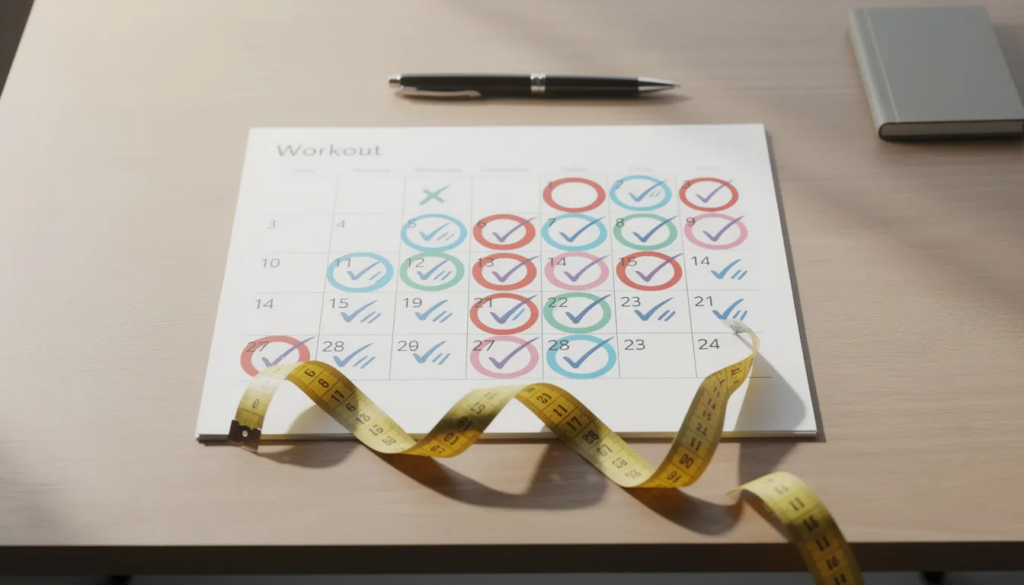
| Waist/hip measurements | Every 2–4 weeks | Body composition changes |
| Progress photos | Monthly, same lighting | Visual changes the scale misses |
| Clothing fit | Ongoing | Practical body changes |
| Energy and stamina | Ongoing | Overall health improvements |
Set process goals, not just outcome goals:
Instead of only focusing on “lose 10 kg,” set specific behavioral targets:
- Walk 8,000–10,000 steps on weekdays
- Complete 3 strength sessions per week
- Plan dinners every Sunday night
- Eat protein at breakfast 5 days per week
- Limit sugary drinks to weekends only
These process goals give you daily wins and stay motivated even when scale weight stalls.
Break big goals into milestones:
Research shows that losing and maintaining even 5–10% of body weight significantly improves health markers like blood pressure, blood sugar, and disease control outcomes. Aim for your first 5% over 8–12 weeks, then reassess.
Build in flexibility:
Life includes holidays, social events, and the occasional indulgent meal. Success isn’t about perfection—it’s about getting back to your routine afterward. Many dieters fall into all-or-nothing thinking, believing one “bad” day ruins everything. It doesn’t. Consistency over time beats perfection every time.
If progress stalls for several months despite consistent effort, consider reaching out to a registered dietitian nutritionist or healthcare provider. Sometimes hormonal changes, medication effects, or other health problems need professional attention.
Putting It All Together for Sustainable Weight Loss
You don’t need a perfect weight loss plan. You need fewer big mistakes and more consistent, reasonable lifestyle changes.
Quick recap of the five corrections:
- Moderate calorie deficit (400–500 below maintenance) instead of crash diets
- Prioritize protein and fiber at every meal to control hunger and protect muscle
- Watch hidden liquid calories and read labels critically
- Add strength training alongside cardio to preserve muscle mass
- Set realistic timelines and track multiple progress markers
You don’t have to fix everything at once. Choose one or two changes to start with this week. Maybe that’s adding lean protein to breakfast and scheduling two 20-minute strength workouts. Small, consistent actions compound into major results over time.
Consider using Simple as a practical way to track meals, drinks, and habits without obsessing over every gram. Having a system for awareness helps you avoid these common mistakes and stay on course when motivation dips.
Sustainable weight loss in 2025 is about building skills and routines you can still live with in 2026 and beyond. It’s about developing healthy habits that feel normal, not punishing yourself with fad diets or cutting calories so drastically that you can’t function.
The goal isn’t the fastest possible drop on the scale. It’s becoming someone who maintains a healthy weight without constant struggle—because they’ve learned how to eat, move, and live in a way that supports their fitness goals naturally.
Start today. Pick one mistake to fix. Build from there.