

Cocaine intoxication encompasses far more than the euphoric high users seek. This powerful stimulant triggers widespread physiological changes affecting every organ system, with cardiovascular complications posing the greatest threat to survival. Deaths from cocaine-involved overdoses reached 27,569 in 2022, according to CDC data, representing a nearly fourfold increase since 2015.
Cocaine floods the brain with dopamine while simultaneously causing severe spikes in heart rate and blood pressure. These effects can escalate from manageable to critical within minutes. Recognizing both the desired effects users chase and potentially fatal adverse reactions becomes critical for everyone’s safety. Professional treatment through private rehab programs offers proven pathways toward recovery, combining medical expertise with therapeutic support to address root causes of dependence.
This drug can kill even first-time users, particularly when mixed with fentanyl or alcohol. Knowing danger signs and when to seek emergency help can mean the difference between survival and tragedy.
What Happens to Your Body During Cocaine Intoxication?
The drug blocks dopamine reuptake in your brain’s reward centers while triggering widespread cardiovascular and neurological damage that can turn deadly within minutes. Intense euphoria, confidence, and energy come at a steep physiological cost.
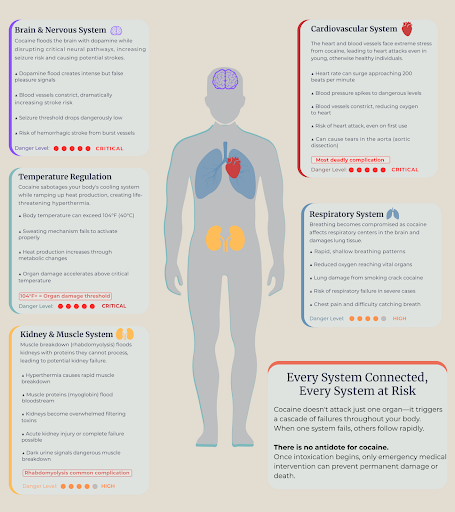
Your heart and blood vessels bear the brunt. Heart rate can surge dramatically, sometimes approaching 200 beats per minute in severe cases. Blood pressure spikes dangerously. Blood vessels constrict throughout your body, forcing your heart to pump harder through narrowed pathways. This combination creates perfect conditions for heart attacks and strokes, even in young people.
Cocaine disrupts your body’s cooling system. Hyperthermia develops as the drug increases metabolic activity while impairing temperature control. Core temperature can climb to 104°F or higher, damaging muscle tissue and potentially destroying kidney function through rhabdomyolysis.
Brain effects can be catastrophic. Cocaine lowers seizure threshold. Blood vessels in the brain spasm and constrict, dramatically increasing stroke risk. Some users develop “excited delirium”—a terrifying state combining hyperthermia, aggression, confusion, and seemingly superhuman strength that often precedes cardiac arrest.
Timing varies by route. Smoking or injecting produces effects within seconds. Snorting takes 3-5 minutes. Intensity peaks quickly but fades within an hour, driving repeated redosing. This pattern creates a cumulative toxic load that overwhelms your body’s ability to compensate.
How to Recognize the Warning Signs of Dangerous Intoxication?
Physical symptoms like chest pain, breathing difficulties, and extreme agitation signal your body can’t handle the cocaine load, while psychological symptoms like paranoia and hallucinations indicate serious brain effects.
Physical Red Flags
Chest pain is the most ominous warning sign. Any pressure or tightness demands immediate medical attention because it signals a potential heart attack. Breathing problems—rapid, shallow breathing, inability to catch your breath, or a sensation of airway closure—indicate respiratory distress. Profuse sweating disconnected from room temperature suggests desperate attempts at cooling.
Tremors and uncontrolled movements show nervous system overload. Even smaller warnings like jaw clenching, muscle twitching, or inability to sit still indicate neurological stress. Skin that feels extremely hot or appears flushed and dry means body temperature has reached critical levels.
Psychological Warning Signs
Mental symptoms often emerge before physical collapse. Severe paranoia beyond typical cocaine effects—believing people are trying to kill you, convinced the room is bugged—signals toxic brain chemistry effects. Hallucinations indicate the drug has pushed past normal intoxication into delirium.
Extreme agitation deserves particular attention. Increasing restlessness, frantic pacing, or signs of impending violence display “excited delirium.” This state frequently precedes sudden cardiac death. Superhuman strength or imperviousness to pain means the brain and body are in crisis.
Risk Multipliers
Certain situations exponentially increase danger. Mixing cocaine with alcohol creates cocaethylene, a more toxic metabolite. Fentanyl contamination means users increasingly face unexpected opioid overdose. Medications for blood pressure, heart conditions, or mental health disorders amplify cardiovascular risks.

When Should You Call 911 for Cocaine Intoxication?
Call 911 immediately if someone experiences chest pain, difficulty breathing, seizures, loss of consciousness, severe confusion, or violent behaviour—these symptoms indicate life-threatening complications requiring emergency medical intervention.
Absolute Emergencies
Any chest pain qualifies as an absolute emergency. Breathing difficulties—gasping for air, bluish lips, rapid shallow breathing—mean oxygen isn’t reaching vital organs. Seizure activity signals brain toxicity. Loss of consciousness or extreme confusion indicates brain malfunction requiring immediate care. Dangerously high body temperature can cause irreversible organ damage within minutes.
Violent behaviour or threats of self-harm require emergency response for everyone’s safety. Cocaine-induced psychosis makes people dangerous.
What to Do While Waiting
Keep the person calm in a quiet environment. Turn them on their side if vomiting. Start gentle cooling with damp cloths—never ice directly on skin. Remove dangerous objects. Don’t physically restrain unless absolutely necessary, as restraint increases body temperature and cardiac stress.
Give responders these details: amount used, timing, other substances involved, medical conditions, and medications. Never offer stimulants. Don’t cool too rapidly. Don’t leave the person alone. Don’t wait, hoping symptoms resolve.
What Does Emergency Treatment for Cocaine Intoxication Look Like?
Emergency rooms treat cocaine intoxication by controlling cardiovascular symptoms with benzodiazepines, cooling body temperature, and providing supportive care since no antidote exists for cocaine.
Medication Protocols
Benzodiazepines like lorazepam serve as first-line treatment. These medications calm central nervous system overactivity, helping lower blood pressure and heart rate while reducing seizure risk. Medical teams often need multiple doses, carefully balancing symptom control against respiratory depression risk.
Temperature Control
Bringing down body heat becomes critical for hyperthermia cases. Emergency departments use tepid water misting with fans. Ice baths work fastest for severe cases but require continuous monitoring. Medical teams aim to reduce dangerous elevations above 104°F (40°C), the threshold where organ damage accelerates.
Monitoring and Support
Continuous tracking measures vital signs minute by minute. ECG machines watch for dangerous heart rhythms. Blood pressure cuffs check automatically. Pulse oximeters measure oxygen saturation.
IV fluids prevent kidney damage from rhabdomyolysis while supporting cardiovascular function. Additional treatments address specific complications—oxygen therapy for breathing, anti-nausea medications, and aspirin for chest pain. Blood tests check heart damage and kidney function.
Why No Quick Fix Exists
The absence of an antidote means treatment focuses on keeping you alive while your body processes the drug. Cocaine typically clears within 72 hours, though the most critical period for life-threatening complications usually passes much sooner with proper medical intervention.
What Should You Do If Cocaine Becomes a Problem?
Cocaine intoxication represents a medical emergency where minutes matter.
Warning signs: chest pain, breathing problems, extreme agitation, confusion, seizures—demand immediate 911 calls. Emergency treatment prevents permanent damage or death, but only if help arrives quickly.
Recovery extends beyond emergency stabilization. Most people experiencing severe intoxication struggle with patterns requiring professional intervention. Treatment programs address both physical dependence and psychological factors driving use, combining medical expertise with behavioural therapy to rebuild lives affected by cocaine.
You don’t have to wait until intoxication becomes life-threatening. Getting help earlier avoids emergency room trauma, prevents organ damage, and starts recovery before cocaine destroys more of your life. Professional facilities offer evidence-based approaches providing the best chance at lasting recovery.