
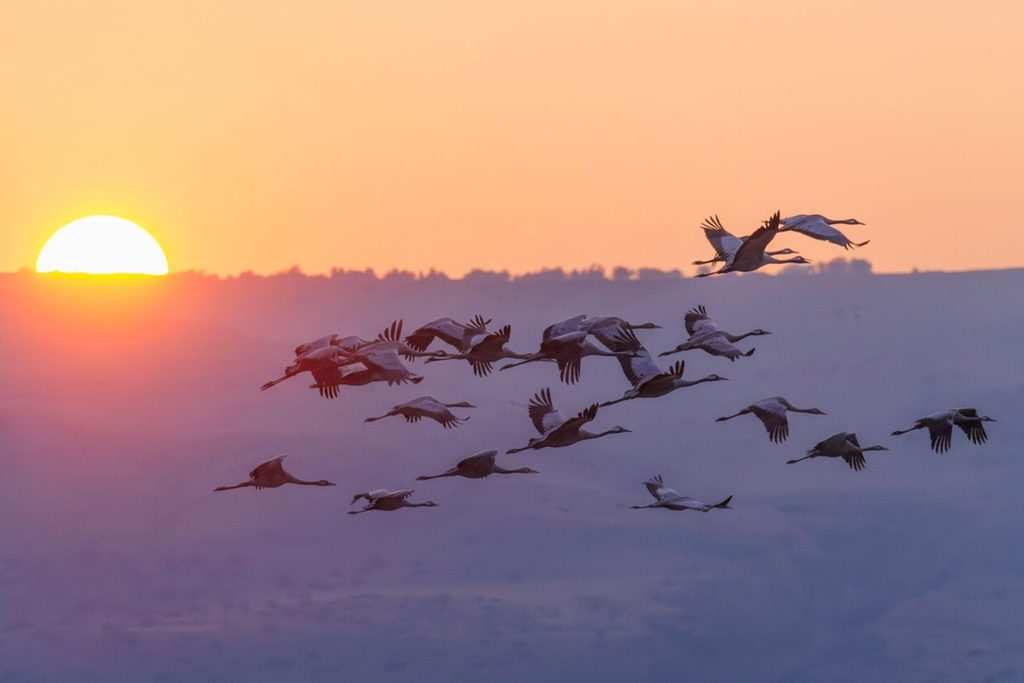
Each spring and autumn, Europe stages one of the most impressive bird shows on the planet, attracting millions of birds passing through on their way between breeding and wintering quarters.
There’s a host of migration ‘hotspots’ that promise both to experience and see the legendary flights. Some of Europe’s best migration destinations include birdwatching tours in Romania, showcasing one of the continent’s most productive pathways.
Romania’s Danube Delta
Romania’s Danube Delta represents one of Europe’s best wetland habitats, and it delivers excellent birding during the annual bird migration. Spread across where the Danube River meets the Black Sea, the delta features a vast complex of reed beds, lakes and ponds, channels, islands and marshes that attract a diverse variety of migratory birds.
Spain’s Strait of Gibraltar
The Strait of Gibraltar in southern Spain holds one of Europe’s most impressive concentrations of passerines. Large numbers of migratory birds pass here twice a year on the way to and from Africa.
In autumn, it is ideal for viewing groups of raptors and soaring birds. Birds such as honey buzzards, booted eagles, short-toed snake eagles, Egyptian vultures, and other migratory species take advantage of thermals to save their energy during their journey. Several established viewpoints are located in and around Tarifa, providing great opportunities to observe flocks of birds as they travel across the strait. However, the timing for these migrations can vary depending on the weather, as wind gives the ideal conditions to enable these birds to make the crossing.
Turkey’s Bosphorus
Istanbul is a city where wildlife experiences don’t end at the city limits. The Bosphorus lies on one of the planet’s great migratory flyways, and the hills above this stretch of water are perfect for observation. Birds heading between Asia and Europe have to negotiate the barrier of the narrow strait, which provides a spectacle for the human residents of Turkey’s largest city. In the autumn, huge numbers of raptors can pass through, and a quiet day on the hills could yield thousands. Spring has its moments, too, and the Istanbul hills offer opportunities to watch migration from one of the more unlikely urban environments. It all means the Bosphorus has added appeal to nature-loving travellers with ambitions to appreciate Europe’s wildlife without visiting the countryside.
4. Falsterbo, Sweden
Autumn migration. That’s why bird-watchers love Falsterbo. The Swedish peninsula draws birds heading south in numbers during those September and October weeks, concentrating migration and watchers in a much smaller area than the rest of Europe. The effect is magical for bird-watchers, especially when it’s a good day, and there are buzzards, falcons and harriers on the move, along with all the smaller passerines. Some visitors are also lured by the peninsula’s other temptations: beach, sea views, and wild country to explore.
Planning your trip around the migration calendar
Any trip to a migration hot spot has to coincide with the big movements of birds. Moreover, different locations are at their best in spring or autumn, and conditions can also vary with the weather, temperature, and even prevailing winds. The key is checking on recent reports and the calendar of movement before making a trip, which will ensure that you are in the right place at the right time. Whether it’s a trip to the wetlands of Romania, the Strait of Gibraltar or the Bosphorus migration in Turkey, right through to a southern meander through Sweden, our migration locations show the scale of the movements in Europe. Each allows you to spend time in landscapes in which geography underscores the point that, thanks to the local wildlife, this is no ordinary part of the world.