
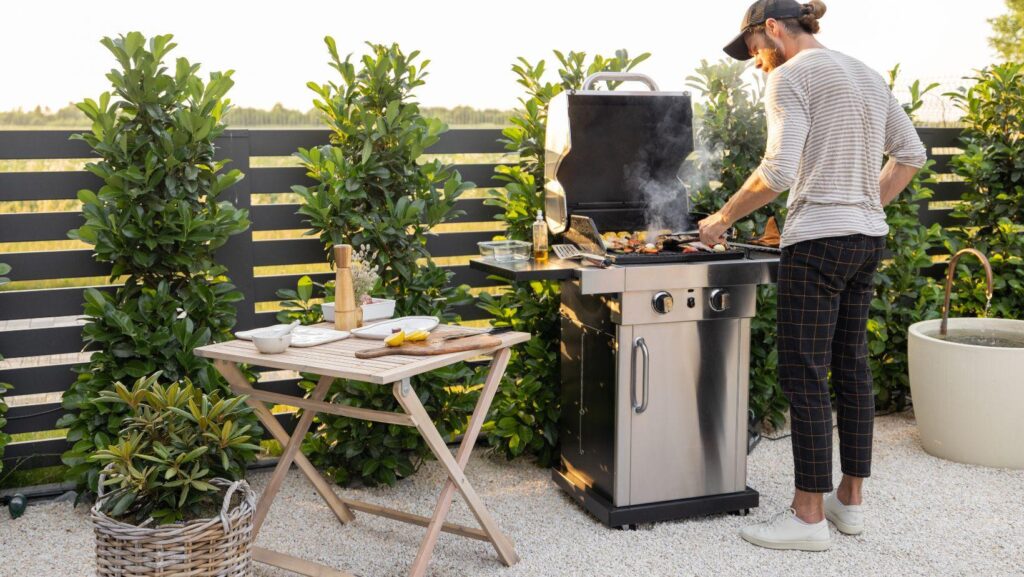
Outdoor cooking is a regular part of how many households use their exterior space. Arranging that space involves more than positioning a single appliance, because the layout affects safety, airflow, movement and the comfort of guests. A considered plan allows occupants to prepare meals without crowding, protect surfaces from heat and keep equipment in reliable condition. By treating the cooking area as a permanent feature of the property rather than a seasonal addition, residents can create a space that remains functional across many seasons.
Assess The Available Space
The first consideration is the amount of usable space available and how occupants move through it. A cooking area requires clearance around the equipment, a surface for preparation and a path that does not cross the main route between the residence and the seating area. Sloped or uneven ground is generally unsuitable for heavy equipment that must remain stable during use.
Additionally, the orientation of the space influences how comfortable it is to use. Prevailing wind can carry smoke toward doors, windows as well as seating, so the placement of the cooking station benefits from attention to typical air movement – this approach reduces smoke entering the residence. Shade from a tree or a structure keeps preparation surfaces cooler during warm afternoons.
Choose Cooking Equipment Carefully
Equipment selection depends on how frequently occupants cook outdoors and what kind of meals they prepare. Fuel type is a factor that shapes preparation time, heat control but also the amount of maintenance required. Units designed for use with grill charcoal typically call for a longer warming period and closer attention to temperature, while gas fed alternatives reach working heat more quickly.
At the same time, the size of the cooking surface deserves consideration alongside the space it occupies. Larger units offer more capacity but may dominate a compact patio and limit the room available for preparation. Storage for tools, fuel plus cleaning supplies is easier to plan when the dimensions of the equipment are known in advance – this step prevents crowded surfaces once the area is in use.
Plan For Safety And Airflow
A cooking area is more effective when it maintains clear separation between heat sources and flammable materials. Fences, wooden furniture, fabric shades and stored fuel should sit well away from the equipment during operation. Enclosed porches and areas beneath low ceilings are generally unsuitable because combustion products require open air to disperse.
Moreover, fuel connections and gas lines involve risks that extend beyond ordinary equipment care. A licensed technician is able to inspect permanent fuel lines and confirm that fittings meet local requirements. Occupants should also verify that the surface beneath the equipment is level and resistant to heat, since stray embers and dripping fat can damage decking over time – these details are easy to overlook during planning.
Maintain The Equipment Regularly
Regular upkeep extends the working life of outdoor cooking equipment and keeps performance consistent. Grease deposits, ash residue as well as blocked burners reduce heat output and increase the risk of flare ups. The removal of debris after each use is usually simpler than addressing accumulated buildup at the end of a season.
In addition, seasonal inspection helps identify problems before they affect a planned gathering. Residents who own outdoor gas grills can examine hoses, regulators and ignition components for wear at the start of the warm months – those who store bbq grills through colder periods are able to protect them from moisture that causes corrosion. Replacement parts are often available for common components, which allows equipment to remain in service rather than being discarded.
Conclusion
Organizing a backyard space for outdoor cooking is a planning exercise rather than a single purchase decision. Usable space, equipment selection, safety clearances and ongoing maintenance each shape how the area performs over time. Attention to airflow and clearance keeps surrounding materials protected while the equipment remains in working order. By planning the layout around how occupants actually gather and cook, households can maintain an outdoor space that stays comfortable across the seasons.