
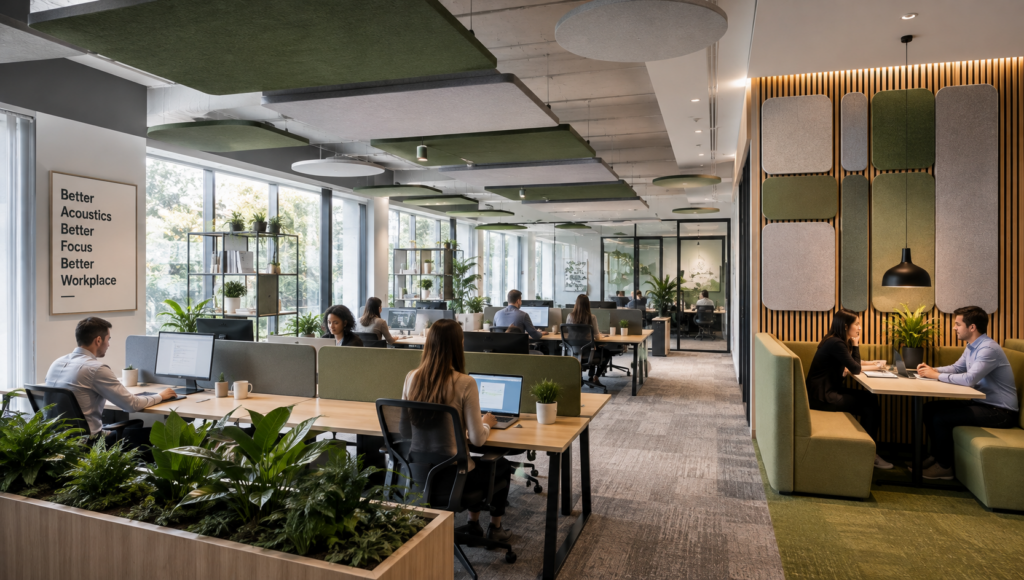
A healthy workplace is about much more than ergonomic furniture, natural lighting, and good ventilation. One of the most overlooked factors influencing employee well-being is sound. Excessive noise, constant interruptions, and poor speech privacy can affect concentration, increase stress, and reduce overall workplace satisfaction.
As businesses continue to embrace hybrid working and collaborative office layouts, creating a balanced acoustic environment has become increasingly important. While open-plan offices encourage teamwork, they can also introduce distractions that make focused work more difficult.
That’s why many organisations are investing in office acoustic solutions for open plan spaces to create quieter, healthier environments where employees can collaborate effectively without sacrificing concentration or comfort. By controlling how sound travels throughout the workplace, businesses can improve both productivity and employee well-being.
This article explores why workplace acoustics matter, how poor sound management affects employees, and the practical steps organisations can take to create healthier, more productive office environments.
Why Workplace Acoustics Matter More Than Ever
Modern offices are designed to encourage communication, creativity, and flexibility. However, without proper acoustic planning, these benefits can quickly be overshadowed by constant background noise.
Everyday workplace sounds include:
- Conversations between colleagues
- Video meetings
- Ringing phones
- Office equipment
- Foot traffic
- Collaborative discussions
While none of these sounds are unusual, together they can create an environment where employees struggle to focus for extended periods.
The Link Between Noise and Employee Well-Being
Continuous exposure to workplace noise affects more than productivity.
Poor acoustics can contribute to:
- Increased mental fatigue
- Higher stress levels
- Reduced concentration
- Communication difficulties
- Lower job satisfaction
- More frequent interruptions
When employees constantly battle distractions, they spend more mental energy regaining focus after each interruption.
Over time, this can lead to frustration and reduced workplace morale.
Supporting Different Ways of Working
Today’s offices need to accommodate multiple work styles throughout the day.
Employees often move between:
- Focused individual work
- Team collaboration
- Client meetings
- Video conferences
- Informal discussions
- Creative brainstorming
Each activity requires different acoustic conditions. A healthy workplace provides spaces where each task can be completed comfortably.
Designing Offices That Support Health and Productivity
Creating healthier workplaces begins with thoughtful acoustic planning rather than simply reacting to noise complaints.
Reduce Echo and Reverberation
Hard surfaces such as glass, concrete, exposed ceilings, and polished flooring reflect sound throughout the office.
Installing acoustic wall panels, ceiling treatments, and soft furnishings helps absorb sound instead of allowing it to bounce around the room.
This creates a calmer environment where conversations remain clear without overwhelming surrounding workspaces.
Create Acoustic Zones
Every employee doesn’t need the same level of quiet.
Dividing the workplace into different acoustic zones allows businesses to support a variety of working styles.
Examples include:
- Quiet concentration areas
- Collaborative workspaces
- Meeting rooms
- Phone booths
- Social breakout spaces
Employees can then choose environments that best match the task they’re performing.
Improve Speech Privacy
Confidential conversations are becoming increasingly common as businesses rely on virtual meetings and client discussions.
Acoustic design helps reduce speech transmission between workstations, protecting privacy while minimising distractions for nearby colleagues.
Practical Ways to Improve Office Acoustics
Creating healthier work environments doesn’t always require a complete office refurbishment.
Several practical improvements can deliver noticeable results.
Install Acoustic Wall Treatments
Wall-mounted acoustic panels absorb reflected sound while adding visual interest to the office.
Modern designs are available in various colours, fabrics, and patterns, allowing businesses to combine functionality with attractive interior design.
Upgrade Ceiling Acoustics
Ceilings often represent the largest reflective surface within an office.
Adding acoustic ceiling baffles, suspended rafts, or sound-absorbing ceiling panels significantly reduces overall noise levels, particularly in open-plan workspaces.
Introduce More Soft Materials
Soft furnishings naturally absorb sound.
Consider adding:
- Carpet tiles
- Upholstered seating
- Fabric screens
- Curtains
- Lounge furniture
- Decorative acoustic panels
These materials help soften the overall acoustic environment while enhancing comfort.
Separate High-Noise Areas
Printers, kitchens, collaboration hubs, and informal meeting spaces often generate more noise than individual workstations.
Positioning these areas away from quiet zones helps minimise disruption throughout the office.
Common Acoustic Mistakes Businesses Should Avoid
Many organisations recognise noise problems but invest in ineffective solutions.
Waiting Until Employees Complain
Acoustic planning works best when integrated into office design from the beginning.
Addressing sound issues early prevents expensive retrofits later.
Assuming One Solution Fits Every Space
Different office areas have different acoustic requirements.
Meeting rooms, reception areas, breakout spaces, and focused work zones each benefit from tailored sound management strategies.
Ignoring Ceiling Treatments
Many businesses concentrate solely on wall panels.
However, ceilings contribute significantly to sound reflection, making overhead acoustic treatments equally important.
Prioritising Appearance Alone
While attractive interiors matter, workplace performance should remain the primary objective.
The best acoustic products improve both aesthetics and employee comfort without compromising either.
Long-Term Benefits of Better Workplace Acoustics
Improving acoustics provides benefits that extend far beyond reducing background noise.
Businesses often experience:
- Higher employee satisfaction
- Improved productivity
- Better communication
- Reduced workplace stress
- Enhanced collaboration
- Greater speech privacy
- More comfortable meeting spaces
- Better support for hybrid working
These improvements contribute directly to a healthier workplace culture where employees feel more comfortable, engaged, and motivated.
As organisations continue investing in employee well-being, acoustic comfort is becoming an essential part of workplace design rather than an optional upgrade.
Conclusion
Healthy work environments don’t happen by accident. They result from thoughtful planning that considers how people interact with the space throughout the day.
While furniture, lighting, and technology all contribute to workplace performance, effective acoustic design plays an equally important role in supporting concentration, communication, and employee well-being. By investing in smarter sound management and high-quality acoustic treatments, businesses can create healthier offices that promote focus, reduce stress, and encourage collaboration. Implementing office acoustic solutions for open plan spaces is a practical step toward building a workplace where both employees and organisations can thrive.