
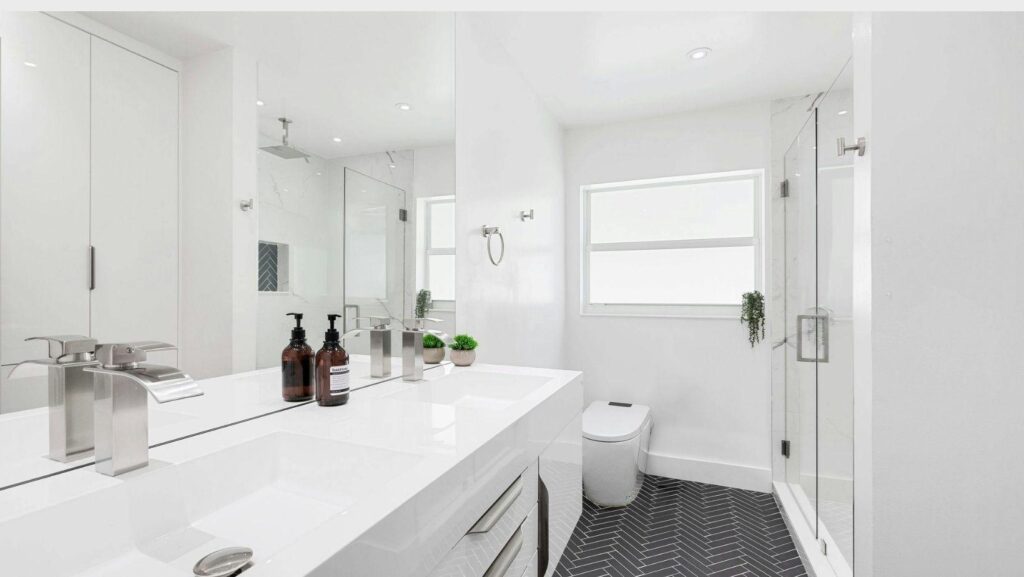
Small bathrooms in apartments often lack sufficient storage space. Drawers and cabinets become crowded quickly when items are not organized – this lack of order makes daily tasks more difficult. A structured plan for storage helps maintain a functional and comfortable environment in a compact room.
Assessment Of Available Space
Initial improvements to bathroom storage require an evaluation of the existing layout. Many people do not use the areas above the toilet, beneath the sink or on empty wall sections – these spots are useful for organization if they are identified early. A wall that is thin and tall is capable of holding shelves.
Practical observation prevents the overcrowding of small zones. Items are easy to reach when every centimeter is used with intention. Efficient solutions are necessary in rental apartments, like those found in for rent Calgary, where built in storage is often minimal.
Implementation Of Vertical Storage Solutions
Vertical storage is an effective method to increase capacity because it does not use floor space. Shelves placed above the toilet or sink provide extra room for hygiene products and towels – these fixtures are simple and serve a clear purpose.
Hooks and organizers mounted on the wall are also important for using high spaces. Hanging hair tools or baskets keeps flat surfaces empty and neat. Moving items to the walls creates an environment that is open and easy to manage.
Organization Of Cabinets And Drawers
Storage areas often become messy if there is no internal structure. Small containers and dividers are useful to separate products – these tools allow you to find items fast because you do not have to search through piles.
Categorizing similar objects together is another way to increase efficiency. Skincare products are kept in one area while cleaning supplies are in another to prevent a mess. Order is easy to maintain when every object has a specific location.
Selection Of Multifunctional Storage Items
Furniture that serves multiple purposes is beneficial for a small bathroom. Mirrored cabinets and storage stools are helpful because they provide utility without being bulky – these items combine different functions to keep the layout simple.
Organizers that hang over the door are practical because they do not require permanent installation – these are ideal for renters who are not allowed to modify the walls. Choosing items with multiple uses reduces the number of separate pieces in the room.
Maintaining A Clutter Free Routine
Storage systems are only effective if they are maintained regularly. You should check your bathroom products often to prevent the collection of items you do not use. Removing old or expired products ensures the storage remains functional.
Daily habits, like returning an item to its spot after use, are also helpful – these small actions keep the bathroom organized with very little effort. Consistent behavior is the most important factor in keeping a storage system successful.
Adapting Storage To Changing Needs
Requirements for storage change as your daily routines or products evolve. Flexibility in your setup allows you to make changes without creating a mess. You can move shelves or replace containers to fit new items.
Observation of your space helps you see which areas need improvement. It is helpful to change the arrangement if a specific spot is difficult to reach. A storage system that adapts is one that remains practical and efficient for your daily life.
Conclusion
Managing a bathroom with limited space is possible through careful planning and regular habits. A small bathroom is organized plus functional when a person uses the area with purpose and assigns a specific location for every object. Clutter is easier to lower but also daily routines are more efficient when a person uses vertical areas, structured systems and furniture that serves a practical use.
Success over time is certain if a person maintains the system as well as makes changes when requirements are different. Regular reviews of the storage layout ensure that the area is useful and not filled with too many items. An environment that is easy to manage remains efficient or comfortable when the approach is adaptable and the user is aware of how they occupy the space.